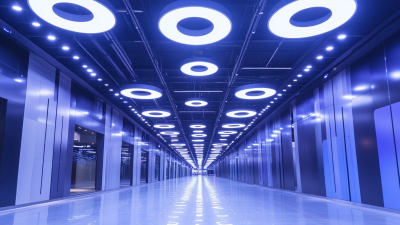

China has become a major sourcing destination for Industrial Lighting buyers worldwide. Its manufacturers offer high-bay fixtures, LED floodlights, warehouse luminaires, streetlights, and explosion-resistant options. However, product choice alone does not prove supplier quality. Buyers need evidence from factory audits, testing records, installation history, and after-sales support.
A reliable supplier should understand real industrial conditions. Dust can settle inside poorly sealed housings. Heat can reduce LED performance. Forklifts may damage exposed fixtures. A serious manufacturer should explain IP ratings, IK protection, thermal management, driver quality, beam angles, and emergency options clearly. Independent reports, such as LM-80, TM-21, and photometric testing, can support technical claims. Yet documents may become outdated. Ask for current samples and project references.
Lighting researcher Dr. Mariana Figueiro has said, “Light is the strongest synchronizer of the circadian system.” Her observation reminds buyers that lighting affects people, not only machines. In factories, glare, flicker, shadows, and uneven brightness can influence comfort and concentration. The cheapest quotation may therefore create hidden operating costs. Still, no supplier is perfect. Even experienced exporters can misjudge local installation conditions or delivery risks. This guide examines China’s leading Industrial Lighting suppliers through practical evidence, technical capability, customization, certifications, communication, and long-term service. The goal is not to promote one company blindly. It is to help global buyers ask sharper questions before placing an order.
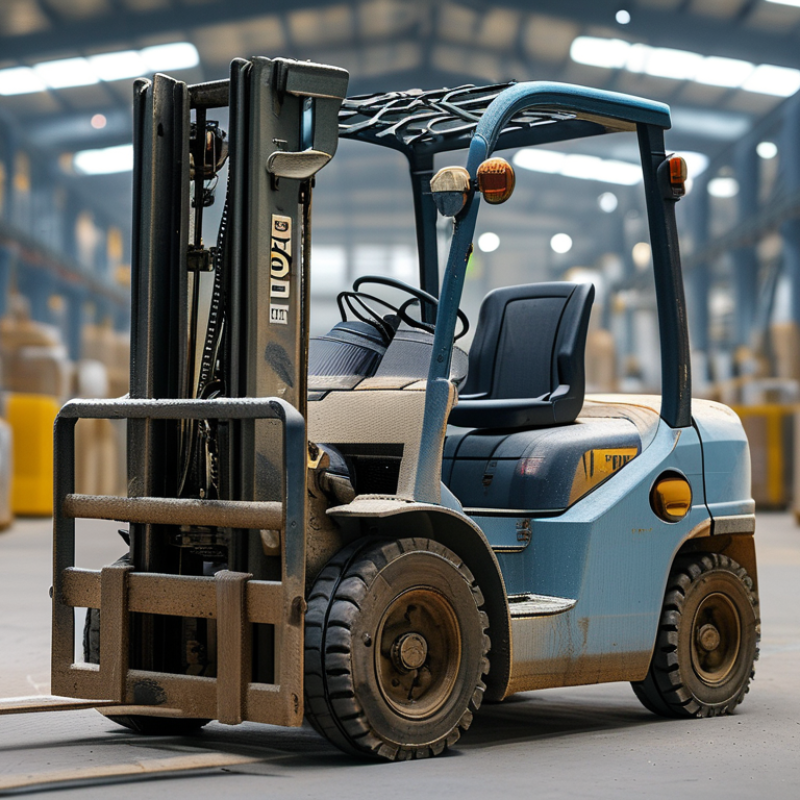
An industrial lighting supplier in China is more than a factory with product catalogs. It should understand warehouses, workshops, ports, tunnels, and harsh outdoor sites. Experienced teams ask about mounting height, dust, moisture, heat, operating hours, and maintenance access. These details shape beam angles, housings, drivers, and control systems. A reliable supplier also provides photometric files and clear performance data. Numbers matter. Yet data must match the delivered fixture, not only a laboratory sample.
Professional capability appears in engineering discipline. Look for incoming-material checks, aging tests, thermal testing, and documented final inspections. Traceable batch records help buyers investigate a failed unit months after installation. Relevant safety and electromagnetic compliance reports should be current, verifiable, and suitable for the destination market. A serious supplier explains limitations instead of promising impossible lifetimes. That honesty is useful. Field experience suggests that modest claims, supported by evidence, are stronger than dramatic brochures.
Industrial projects also depend on communication. Suppliers should confirm drawings, samples, packaging, delivery schedules, spare parts, and installation guidance in writing. Small misunderstandings can create dark zones or costly rework. Factory visits and independent inspections add practical confidence when project value justifies them. Still, no supplier performs perfectly every time. Not always. A missed detail may reveal weak training or an unclear approval process. Buyers should record corrective actions and check whether the same issue returns. Those records often reveal more than a polished sales presentation.
A practical comparison framework for evaluating industrial lighting suppliers, manufacturing capability, compliance, and export readiness.
| Evaluation Dimension | What Defines a Capable Supplier | Verifiable Data or Evidence | Why It Matters to Global Buyers | Relevant Standard or Reference |
|---|---|---|---|---|
| Product Application Coverage | Provides lighting designed for factories, warehouses, workshops, logistics facilities, tunnels, hazardous areas, and outdoor industrial sites. | Application-specific product sheets, photometric files, installation instructions, and operating-temperature specifications. | Reduces the risk of selecting a technically unsuitable luminaire for dust, moisture, vibration, heat, or corrosive environments. | IES LM-79; IEC 60598 series; IEC 60529. |
| Photometric Performance | Reports delivered lumens, luminous efficacy, beam distribution, color temperature, color rendering, and power factor under defined test conditions. | Third-party or laboratory photometric reports, IES or LDT files, integrating-sphere measurements, and sample test results. | Allows lighting designers to calculate illuminance, uniformity, energy consumption, and replacement quantities accurately. | IES LM-79; CIE S 025; EN 13032. |
| Ingress and Impact Protection | Offers enclosure ratings appropriate to the installation environment, with sealed construction, protected cable entries, and impact-resistant materials where required. | Test reports showing the claimed IP and IK ratings, product construction details, and installation limitations. | Helps prevent water ingress, dust contamination, mechanical damage, premature failure, and safety incidents. | IEC 60529 for IP ratings; IEC 62262 for IK ratings. |
| Thermal Management | Uses a suitable heat sink, thermal interface, housing design, and current management to control LED and driver temperatures. | Thermal test data, ambient-temperature range, temperature measurements, and rated lifetime at stated operating conditions. | Industrial facilities often operate for long hours and at elevated temperatures, making thermal design important for service life. | IES LM-80; IES TM-21; IEC 62717. |
| Electrical Safety and EMC | Controls insulation, grounding, surge protection, electromagnetic compatibility, power quality, and driver safety across the specified input range. | Electrical safety reports, EMC test reports, surge rating, power-factor data, total harmonic distortion data, and wiring diagrams. | Supports safe operation and reduces interference with industrial machinery, control systems, and power networks. | IEC 60598-1; IEC 61347; IEC 61547; CISPR 15. |
| Quality Management | Maintains documented incoming inspection, process control, final inspection, traceability, nonconformance handling, and corrective-action procedures. | Current quality-management certificate, inspection plans, sample inspection records, serial or batch traceability, and corrective-action reports. | A controlled process improves consistency across large orders and repeat production batches. | ISO 9001 quality-management principles. |
| Component and Supply-Chain Control | Defines approved component specifications and manages changes to LEDs, drivers, lenses, housings, surge devices, and connectors. | Bills of materials, approved vendor lists, change-control procedures, incoming inspection records, and component warranty terms. | Prevents unapproved substitutions that can change performance, compliance status, color consistency, or product lifetime. | ISO 9001 change-control practices; buyer-specific quality agreements. |
| Environmental and Chemical Compliance | Maintains material declarations and evaluates products against applicable restrictions on hazardous substances and market-entry requirements. | RoHS declarations, material test reports, technical files, and market-specific conformity documentation. | Supports customs clearance, customer audits, environmental procurement policies, and legal market access. | EU RoHS Directive 2011/65/EU and amendment 2015/863; REACH where applicable. |
| Customization and Engineering Support | Can adapt wattage, optics, mounting, cable length, control interfaces, housing finish, emergency functions, and labeling to project requirements. | Engineering drawings, revision-controlled specifications, prototype records, sample approval procedures, and design-change history. | Project-specific adaptation can improve installation efficiency and reduce redesign or field-modification costs. | Buyer technical specification; IEC 60598 applicable requirements. |
| Production Capacity and Lead-Time Control | Has defined production lines, capacity planning, material availability controls, testing capacity, and contingency procedures for volume orders. | Monthly capacity statement, production schedule, order-to-shipment records, bottleneck analysis, and documented lead-time commitments. | Reliable delivery is essential for construction schedules, plant shutdowns, retrofit programs, and multi-site rollouts. | Contractual delivery terms; buyer-approved production schedule. |
| Warranty and After-Sales Service | Provides clear warranty coverage, failure-analysis procedures, replacement policies, spare-part support, and technical assistance after installation. | Written warranty terms, response-time targets, return-material procedures, failure reports, and spare-parts availability records. | Transparent service conditions reduce lifecycle risk when products are installed in remote or continuously operating facilities. | Project contract; stated operating conditions; applicable consumer or commercial law. |
| Export and Documentation Readiness | Prepares accurate technical files, packing lists, commercial invoices, certificates, installation manuals, labels, and shipping documentation for the destination market. | Sample export document set, product labels, country-specific declarations, packaging specifications, and Incoterms-based quotations. | Complete documentation helps avoid customs delays, installation errors, and compliance disputes. | Applicable destination-country regulations; Incoterms® 2020. |
| Project Economics and Lifecycle Value | Evaluates total cost using energy consumption, maintenance intervals, replacement availability, installation labor, controls, and expected service life—not only unit price. | Energy model, photometric replacement plan, maintenance assumptions, warranty cost exposure, and total-cost-of-ownership calculation. | A lower purchase price may not provide the lowest lifecycle cost in high-bay, outdoor, or difficult-access installations. | Project energy model; ISO 50001 energy-management principles where relevant. |