
Made in Britain
BrightLEDBrightLED
MENUMENU
  • Home
  • Products
  • Projects
  • About
  • Blog
  • Contact
Blog
How to Choose the Best Floor Lamp for Any Space?

How to Choose the Best Floor Lamp for Any Space?

Choosing the right Floor Lamp is more than matching a shade to a sofa. It is a practical lighting decision involving comfort, safety, energy use, and room proportion. The International Energy Agency and United Nations Environment Programme report that lighting represents about 15% of global electricity consumption. That figure makes efficiency worth considering, even for one living room. The U.S. Department of Energy also states that LED bulbs use at least 75% less energy and last up to 25 times longer than incandescent bulbs.

A useful choice begins with the room’s actual needs. A reading corner may require focused, adjustable light near 800 lumens. A lounge area may benefit from softer, indirect illumination. Check the bulb’s color temperature, too. Around 2700K to 3000K usually feels warmer and more relaxing. For artwork or detailed tasks, a high color rendering index can reveal more natural colors. Look for a CRI of 80 or higher. A stable base matters on narrow floors. So does a shaded design that protects your eyes from direct glare. Small details become obvious at night.

There is no perfect lamp for every space. I sometimes overestimate appearance and underestimate switch placement. That mistake is easy to repeat. Measure the lamp beside the sofa, bed, or desk before buying. Confirm the cord can reach a safe outlet without crossing a walkway. Review independent product testing where available, and follow the manufacturer’s installation guidance. This approach supports informed decisions, rather than relying on attractive photographs or vague promises. A well-chosen Floor Lamp should quietly improve the room, consume reasonable energy, and remain useful after the trend disappears.
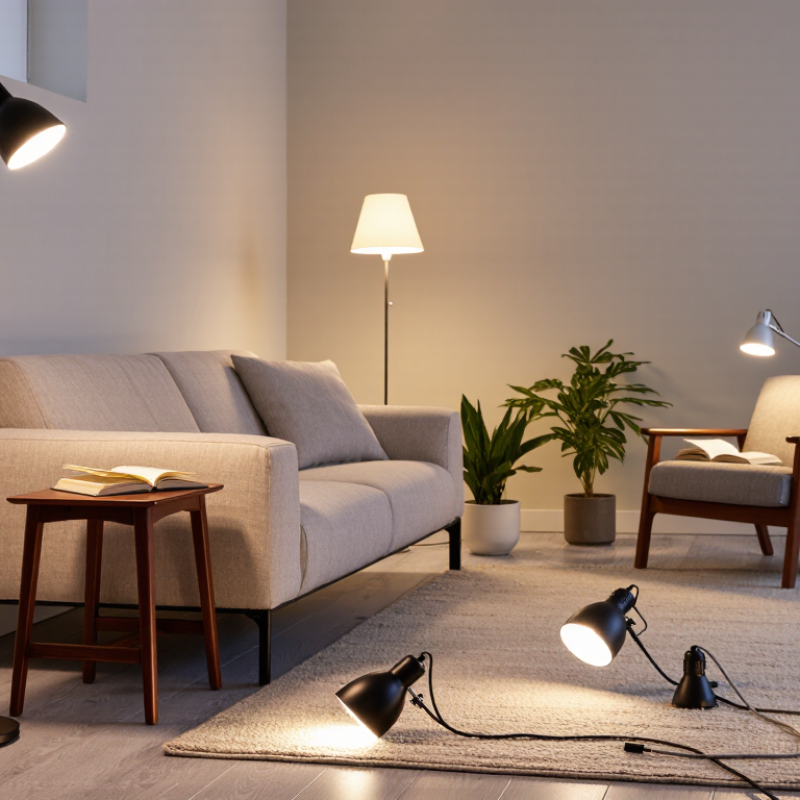
How to Choose the Best Floor Lamp for Any Space?
Table of Contents [Hide]
1 Assess Room Function and Set Illuminance Targets with IES Guidance
2 Calculate Required Lumens from IES Task- and Ambient-Lighting Levels
3 Choose CRI 90+ and 2700–3000 K for Comfortable Residential Color
4 Verify UL 153 Safety Listing, Base Stability, Cord Routing, and Clearance
5 Compare LED Efficacy, Dimming Compatibility, and ENERGY STAR Criteria

Assess Room Function and Set Illuminance Targets with IES Guidance

A floor lamp should serve the room’s main activity, not merely fill an empty corner. In a reading nook, direct light should reach the page without creating glare. In a living room, softer ambient light can support conversation and movement. IES guidance recommends setting illuminance according to the task, visual age, contrast, and room surfaces. For reading, a practical starting point is 300–500 lux at the task plane, then adjust through testing.

Tips: Measure at the book, desk, or floor surface. Check shadows from your usual sitting position. Choose adjustable height or beam direction when possible. A bright lamp can still feel uncomfortable.

Before buying, observe the room at night. Dark walls absorb light, while pale walls reflect it more effectively. A frosted shade may reduce harshness, but it can also lower useful output. Select a lamp with stable light distribution, suitable color quality, and controls that allow gradual adjustment. Keep the lamp away from walkways and ensure its base remains steady on rugs or uneven flooring.

Do not trust the package alone. Wattage describes energy use, not visual comfort. Compare lumen output, beam spread, color temperature, and dimming behavior. IES recommendations are valuable references, but they are not a substitute for measuring your actual space. My own first choice has sometimes looked perfect in a showroom and felt too bright at home. Test the lamp where you will use it.


Calculate Required Lumens from IES Task- and Ambient-Lighting Levels

How to Choose the Best Floor Lamp for Any Space?

Choosing a floor lamp starts with the activity, not the shade style. IES lighting guidance commonly places reading and detailed tasks near 300–500 lux. Relaxed ambient areas may need only 100–200 lux. These are practical starting points, not rigid rules.

Calculate the estimated output with this formula:

lumens = target lux × floor area in square metres

A 10-square-metre reading corner needing 300 lux requires about 3,000 useful lumens. Real rooms lose light through shades, wall colors, furniture, and beam direction. Divide the result by an estimated utilization factor, such as 0.6–0.8, to choose a safer lamp output. For that corner, 3,750–5,000 lamp lumens may be reasonable. Check the actual product specification carefully. I have found that published lumen ratings can feel optimistic.

Tips:

Measure the space and task area separately. Place the lamp beside, rather than directly behind, your chair. Use adjustable brightness when possible. A warm 2700–3000K light often feels comfortable at home, while neutral light can improve visual clarity. Avoid glare on glossy pages and screens. Test at night. Your first estimate may still be wrong. Shelves and dark curtains can absorb more light than expected.

Choose CRI 90+ and 2700–3000 K for Comfortable Residential Color

When choosing a floor lamp, color quality matters as much as brightness. The U.S. Department of Energy describes 2700–3000 K as warm white, a range that suits bedrooms, living rooms, and reading corners. It produces a gentle amber tone, similar to late-afternoon sunlight. I prefer 2700 K beside a sofa, but 3000 K can feel clearer near a desk. Your wall color may change the result.

Look for a color rendering index of 90 or higher. The CIE 13.3-1995 method established CRI as a common measure of color fidelity. However, CRI is not a complete guarantee. The Illuminating Engineering Society’s TM-30 guidance also examines fidelity and gamut, including how reds and skin tones appear. A lamp can score well while still making a tomato look slightly dull. I have noticed this in real rooms.

Check the actual product data, not only the packaging. The U.S. Department of Energy’s solid-state lighting reports encourage evaluating color quality, efficiency, and long-term performance together. Place the lamp near a wood table, green plant, or fabric chair before deciding. These surfaces reveal weak color rendering quickly. Dimming can also shift the mood, and some lamps become unpleasantly yellow at low output. That small detail deserves testing.

Residential Floor Lamp Guide: Comfortable CCT and High CRI

For comfortable residential lighting, select a floor lamp with a color temperature of approximately 2700–3000 K and a CRI of 90 or higher. Warmer light is generally suitable for bedrooms, living rooms, and dining areas, while a slightly cooler range can support visual tasks in a home office.

Verify UL 153 Safety Listing, Base Stability, Cord Routing, and Clearance

Choosing the best floor lamp begins with safety, not appearance. Check for a genuine UL 153 safety listing on the product label or documentation. This standard applies to portable electric luminaires in the United States. Do not rely only on a marketplace description. Verify the marking, model details, and electrical instructions before purchasing. A missing label deserves caution.

Base stability matters on carpet, wood, and uneven flooring. A wide, weighted base should resist tipping when the lamp is gently nudged. Test it near the sofa, especially if children or pets use the room. Route the cord along a wall or behind furniture, never across a walking path. Keep plugs away from damp areas. Leave enough clearance from curtains, bedding, and paper decorations. Heat needs space.

Tips: Measure the intended corner first. Note the outlet position. Choose a lamp with a reachable switch. Inspect the cord for cuts, loose insulation, or sharp bends. I once placed a tall lamp too close to a curtain; it looked attractive, but the clearance was poor. That mistake changed my buying checklist. A stable lamp can still be inconvenient if its cord is short or its switch sits behind furniture. When uncertain, choose a simpler design with clearer instructions and stronger physical balance.

Compare LED Efficacy, Dimming Compatibility, and ENERGY STAR Criteria

How to Choose the Best Floor Lamp for Any Space?

A floor lamp should fit the room’s work, not only its style. Compare delivered lumens and LED efficacy, measured in lumens per watt. Higher efficacy usually means more light with less electricity. However, efficiency alone can mislead. A narrow beam may feel brighter than a softer lamp with similar output. In a living room, I check whether the lamp illuminates a reading chair without creating glare on a television screen.

Dimming compatibility deserves careful attention. Confirm that the lamp supports the dimmer already installed in your home. Some LEDs work with leading-edge dimmers, while others require trailing-edge or specialized controls. Look for a smooth range from bright task lighting to low evening light. Flicker matters, too. A lamp that buzzes or pulses at low settings can become tiring. I once chose a highly efficient lamp that dimmed poorly. The specification looked excellent, but daily use was frustrating.

ENERGY STAR criteria add a useful layer of independent verification. Certified lighting products must meet defined requirements for energy performance, light output, color quality, and durability. Check the current certification details, because requirements can change. Also compare the lamp’s actual wattage, estimated annual energy use, and color temperature. Warm light around 2700K suits bedrooms, while neutral light can help detailed tasks. Do not trust every sales claim. Read the test data. Even then, personal comfort remains part of the decision.

Article Source:

  • External Wall Light
  • External Ceiling Lights

Interested? Let's talk.

Talk to the Experts

Let us help you get started with our superior LED lighting products.

Call 01282 505400

Request a call

Email us

Join our newsletter

Get all the latest news from BrightLED.

See our product range

Can't find a product you're looking for? Get in touch!

View Range

Product Categories

  • 2D Style Fitting
  • LED Downlights
  • LED Flood Lights
  • Linear Lights
  • LED Industrial Lighting
  • Office Lighting
  • Retail LED Lighting
  • Emergency Lighting
  • LED Lamps
  • LED Tube Lighting
  • Recessed LED Light
  • Spot Light Series
  • IP65 & Non-corrosive Rating LED Fittings
  • View all products

Useful Links

  • Download/Resources
  • Privacy
  • Warranty Policy
  • Terms and Conditions

Company

  • About
  • Projects
  • Contact
  • Blog
  • Made in Britain
  • Samsung
  • Osram
  • Tridonic

Copyright © Bright LED. All rights reserved.

STAY CONNECTED

Top